

Crossing the Threshold: Vulnerability, Adaptability, and Courage in Leadership
By - Gareth Kaatze
It all seems impossible—until you do it.
Nike captured this perfectly with their iconic Serena Williams campaign: “It’s only a crazy dream, until you do it.” The advert showed a young Serena at the start of her journey, before the trophies, before the spotlight—before the world knew her name. Today, she’s more than a tennis champion. Serena has become an archetype of resilience, a leader for women, athletes, and dreamers everywhere. She embodies what it means to stand tall against doubt, prejudice, and the sheer weight of expectation.
But her story isn’t one of solitary genius. Behind Serena’s rise was the relentless vision of her father, Richard Williams—a man whose leadership was as controversial as it was effective. The film King Richard reveals this paradox: a guiding hand that was often uncompromising, sometimes extreme, but undeniably catalytic. Leadership in his case wasn’t soft or subtle—it was a fire that forged champions.
And perhaps that’s the deeper lesson. Greatness rarely emerges in a vacuum. Behind every leader we celebrate, there’s often another leader—a coach, a mentor, a parent—who held the line when the dream looked impossible.

“It always seems impossible until it’s done.”
— Nelson Mandela (and later, Serena Williams on a Nike poster)
Nike’s iconic advert of a young Serena Williams read: “It’s only a crazy dream, until you do it.” At the time, she wasn’t yet the greatest tennis player of all time. She was a young girl with braids and oversized ambition, standing at the edge of the impossible. The ad didn’t just celebrate victory—it captured the courage of starting, of holding the line when no one else sees what you see.
That same spirit runs through leadership. The victories we celebrate in public are born from invisible crucibles of pain, doubt, and relentless adaptation. Serena’s rise was forged not in solitude, but in the furnace of family, mentorship, and a father’s uncompromising (and sometimes controversial) guidance. Leadership never happens alone.
And right now, we stand together on the edge of our own impossible dream. Collectively, we’re navigating what feels like an eschaton—an end and a beginning all at once. Climate breakdown, AI upheaval, culture wars, political gridlock. The world is moving too fast for static playbooks. We need adaptive leaders. Leaders with vulnerability, adaptability, and courage—the holy trinity for navigating a crazy, novel, and expansive future.
This is my journey into that kind of leadership.
Vulnerability
I never thought of myself as a leader. At school I was the sidekick, never the ringleader. I followed my own path, yes—but I didn’t rally the posse.
My first real lesson in leadership came through vulnerability. When my mom got sick with cancer, a part of me wanted to run from the pain. I numbed myself with alcohol and escapism. It wasn’t until I hit a wall and entered treatment that I truly began. In those circles, in those raw and messy shares, something shifted. My peers voted me leader of our group. For the first time, I realized leadership wasn’t about being the loudest voice. It was about being the most honest.
That moment cracked me open. I began devouring psychology, self-help, Jung, and Gabor Maté. I stood up at both my parents’ funerals and spoke through my grief. Vulnerability was no longer weakness—it became my entry point into resilience.
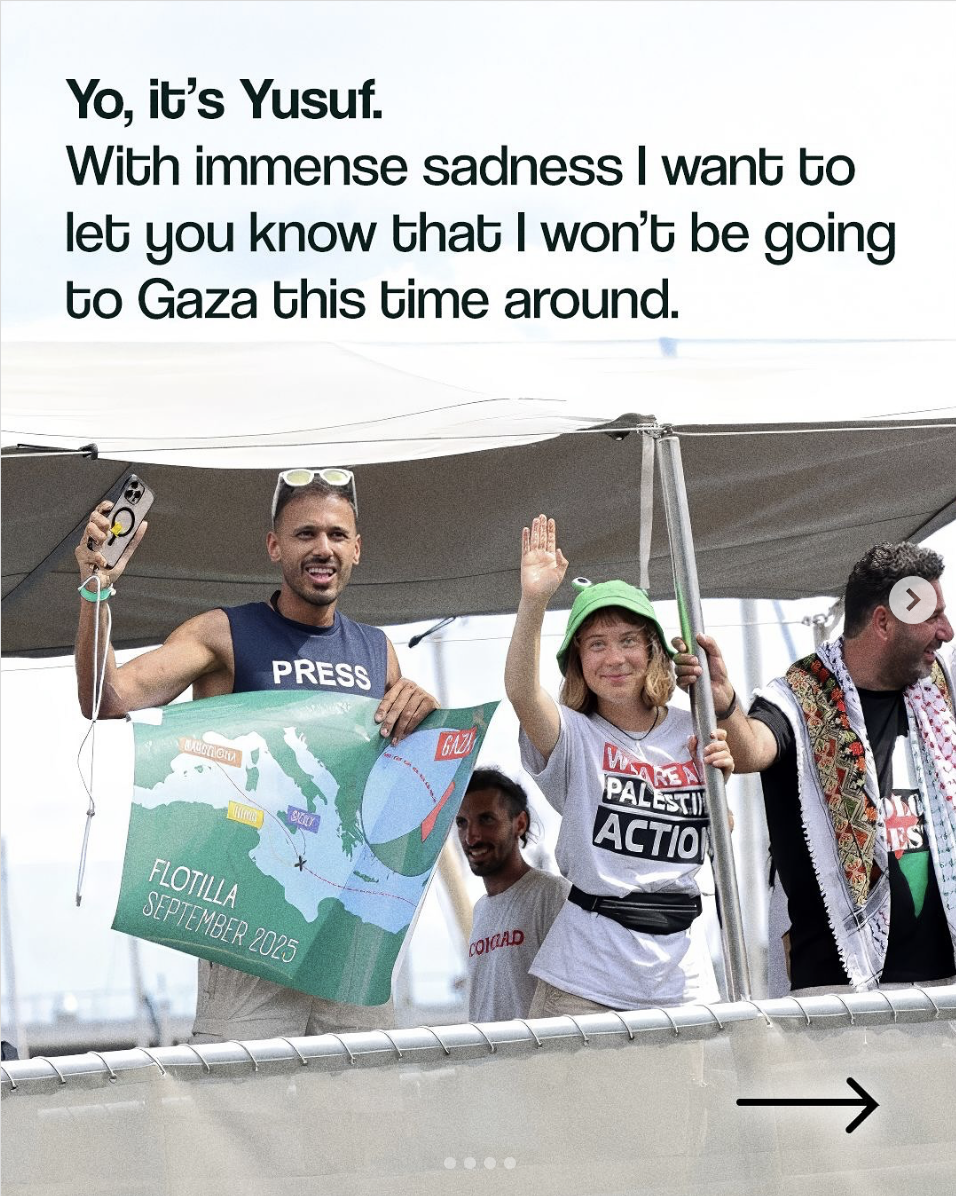
I think of my old boss Yusuf on the Gaza flotilla. He put his life on the line, willing to face bombs and global scrutiny to shine light on atrocities most people shy away from. Vulnerability at that scale is terrifying. But it’s also the deepest kind of leadership.
If vulnerability was my initiation, adaptability became my apprenticeship.
I shifted from victimhood into service, and my career began to mirror that inner pivot. At Seen.tv we told raw, frontline stories—the homeless crisis in LA, police brutality in Kenya, water shortages in Zimbabwe. Real people. Real stakes. Adaptability wasn’t optional; it was the only way forward.
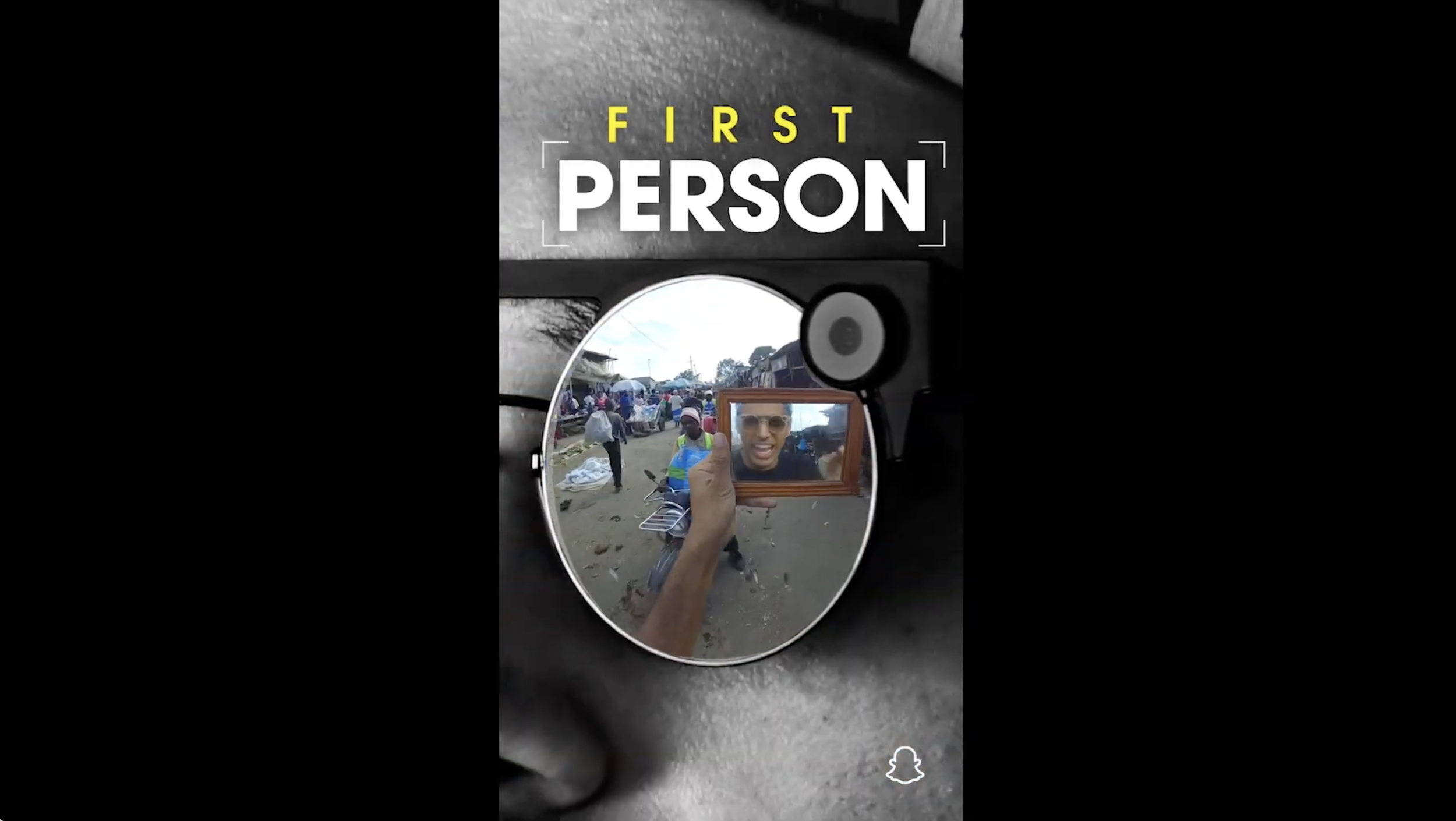
Later, I co-directed a climate change series for Snapchat Originals. We highlighted innovators turning urine into housing bricks and replacing plastic hair extensions with grass alternatives. A tiny team, 10 episodes, and the reach of Spielberg’s productions. We had to adapt daily to make it work.
From Beast Philanthropy to Africa Code Week to EduConservation, I kept working with organizations solving impossible problems. Each time I learned: adaptability isn’t about bending with the storm—it’s about finding flow inside it.

Courage
And then, courage.
And then, courage.
I’ve had the privilege of standing beside courageous leaders: the Rebels for Peace in Chicago, teaching mindfulness in high-risk schools; Eben Etzebeth on a commercial set with 45 crew; underprivileged surfers in a short film that made its way to Ciclope finals. Each project demanded courage to believe in something bigger than yourself.
I’ve walked my own path too—leaving behind a successful film career to follow my heart into coaching. It’s terrifying to pivot when no one else sees what you see. But courage is just that: the willingness to act in uncertainty.
Along the way, I’ve learned from giants like Jamie Wheal, Paul F. Austin, and Paul Chek. I’ve trained young men in the Flow Accelerator to live with more purpose. And today, I coach leaders and change-makers to show up with vulnerability, adaptability, and courage—the same qualities that have shaped me.

Back to the Flotilla
I return often to Yusuf on that flotilla. His willingness to risk it all for truth reminds me: leadership isn’t a title, it’s a posture. It’s standing in the storm when everyone else seeks shelter.
And I think back to Serena. A little girl on a cracked court, daring to believe in the impossible. Today, she embodies not just a champion, but a cultural archetype of resilience, grace, and relentless courage.
The Edge of the Impossible
Right now, we all stand where Serena once stood—staring down the impossible. Except this time, it’s not one young athlete with a racket in her hand. It’s all of us.
We live at the brink of what philosophers call the eschaton—a tipping point where everything feels like it could collapse or transform at once. Climate upheaval, AI disruption, cultural fragmentation, spiritual searching—it’s an overwhelming menu of futures, and none of them come with a playbook. It’s as if we’re standing at a crossroads where every path is uncertain, every choice feels irreversible, and the stakes couldn’t be higher.
In this crucible, the world doesn’t just need managers or caretakers. It needs adaptive leaders. Leaders with the courage to face novelty without flinching, with the vulnerability to admit they don’t have all the answers, and with the adaptability to pivot when the map no longer matches the terrain.
This isn’t leadership as charisma or command. This is leadership as resilience architecture. As culture-shaping. As the daily work of weaving purpose into performance so teams don’t just survive uncertainty, they thrive within it.
The Serena story reminds us: what looks impossible today can become inevitable tomorrow—with the right vision, relentless practice, and leadership that refuses to bow to circumstance.
The FloLab Leadership™ Framework
This is what I’ve built my work on. A framework for leaders who want to design clarity, optimize performance, sustain flow, and embody purpose in the heat of uncertainty.
Design with Duty – Create clarity of vision and responsibility.
Optimize & Orient – Align your energy, habits, and systems toward the mission.
Shift States & Sustain – Learn to move fluidly between pressure and recovery, performance and rest.
Embodiment & Experience – Lead not just with words, but with presence. Build cultures of resilience and purpose-driven performance.
Because leadership isn’t about what seems possible. It’s about facing the impossible with vulnerability, adaptability, and courage—until the crazy dream becomes the new reality.
The Five Thresholds of Transformational Leadership
Every transformational leader walks through a sequence of inner thresholds. These aren’t linear steps or performance hacks — they’re initiatory stages that mark the evolution from ambition to service, from raw drive to embodied purpose.
At FloLab, these thresholds form the backbone of how we coach leaders to become more adaptive, resilient, and attuned to the future they’re trying to build.
1. Master Your Inner Wildness
Before a leader becomes wise, they’re potent. But potency without direction is volatility.
Every high performer starts out filled with potential energy: drive, hunger, talent, ego, intuition, ambition. That “inner wildness” is not a flaw — it’s fuel.
But here’s the leadership paradox:
Everything that makes you powerful early on becomes your liability later if it’s not integrated.
The impulsiveness that made you bold becomes reactivity.
The ambition that pushed you becomes burnout.
The confidence that carried you becomes blind spots.
This first threshold is about inner governance.
Learning to regulate your nervous system.
Staying centered under pressure.
Turning reactive patterns into conscious choices.
Before you can lead others, you learn to lead the parts of yourself that don’t want to be led.
2. Choose Your Pilgrimage
There is no transformational leader who didn’t leave home — literally or metaphorically.
Purpose isn’t found in comfort; it’s forged in the friction between who you’ve been and who you’re becoming.
Your “pilgrimage” might be:
A mission that demands more from you than you think you have
A crisis that forces a reinvention
A calling you can’t intellectually justify but can’t ignore
What matters is that it pulls you beyond your familiar identity structures.
This threshold is where leaders separate from the consensus trance — the inherited dreams, corporate scripts, parental expectations, cultural narratives — and ask the dangerous question:
“What is mine to do?”
Once you choose the path, the path shapes you.
3. Build the Circle That Shapes You
There is no such thing as a lone transformational leader.
Every great leader is the sum total of their alliances, mirrors, mentors, challengers, and companions.
Your team — personally and professionally — is the alchemy chamber where your next version emerges. And whether you’re aware of it or not, the people around you reflect:
Your unresolved stories
Your strengths and blind spots
Your leadership maturity
Your emotional and ethical bandwidth
This threshold is where leaders learn that “relationship” is not a soft skill — it’s the performance architecture of high-functioning teams.
The circle you build becomes the ecosystem that calibrates your leadership, sharpens your edge, and stabilizes your mission through change, conflict, and uncertainty.
4. Walk the Thresholds That Test You
Transformation doesn’t come from vision boards or quarterly offsites.
It comes from thresholds — the moments that stretch, break, humble, and re-route you.
Every leader encounters:
Market shocks that collapse your certainties
Team conflicts that expose your communication patterns
Fatigue that reveals your unsustainable habits
Purpose-doubts that hollow out your confidence
Unexpected opportunities that tempt your ego or challenge your integrity
These thresholds are not obstacles — they are the curriculum.
Your nervous system, your identity, and your habits are being rewired in real time.
Leaders who thrive in uncertainty aren’t the ones who avoid thresholds.
They’re the ones who learn to metabolize them.
5. Convert Power Into Service
This is the final pivot — the one that differentiates “high performers” from “high-impact leaders.”
At some point, the ego’s hunger for recognition, status, security, and control loses its charge. You stop operating from “What do I want?” and begin asking:
“What is the work that wants to happen through me?”
This is where leadership becomes stewardship.
Power becomes responsibility
Talent becomes contribution
Achievement becomes meaning
Performance becomes alignment
Leaders who reach this threshold stop chasing peak states as personal trophies. They cultivate flow as a collective multiplier — a way to elevate the entire culture, not just their own output.
They build futures their teams want to belong to.
They choose sustainability over burnout cycles.
They operate from purpose, not pressure.
This is transformational leadership:
Power made ethical. Purpose made operational. Performance made sustainable.
